
The Bottom Line: A tense, twisty murder mystery built on false evidence, fierce loyalties and a heroine worth following anywhere.
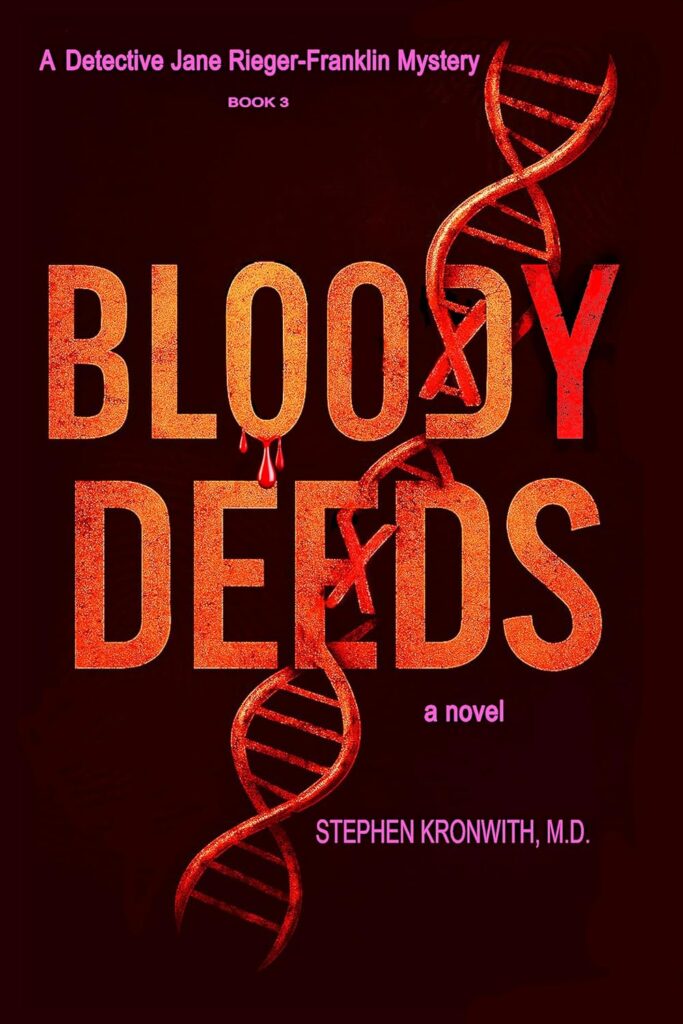
As Bloody Deeds opens, Nassau County homicide detective sergeant Jane Rieger-Franklin is at home with her wife, Anna, talking about artificial insemination and the future shape of their family. Then the phone rings, and the novel swerves hard into crisis.
CPA Jeremy Summers, husband of Detective Vivian Summers, is found murdered beside a nude woman in a New Hyde Park house. For Jane, this isn’t merely a murder case. It’s also a personal catastrophe, as Vivian is one of Jane’s closest friends.
As the third entry in Stephen Kronwith’s Jane Rieger-Franklin mystery series, Bloody Deeds continues one of the series’ defining strengths: grounding a high-stakes investigation in a fully lived family world rather than the usual mythology of the isolated detective.
Kronwith frames the mystery not simply as a question of who pulled the trigger, but as a question of whether evidence itself can be trusted. Jane arrives at the scene already burdened by grief and loyalty, yet the procedural machinery keeps moving: forensic observations, traffic-camera data, DNA, and the ugly public optics of a husband killed in what looks like an adulterous encounter.
Jane’s instinct is that something about the staging is wrong, and the early chapters gain much of their suspense from watching her try to separate real clues from clues designed to humiliate and condemn. She is capable, emotionally exposed, and forced to investigate along the fault line between professional duty and personal allegiance.
One of the series’ defining pleasures remains intact here: Kronwith sets grim crimes against a household alive with loyalty, banter, and emotional intelligence, so that the suspense lands not in isolation but in the midst of family. Meanwhile, chapters involving Felicity and Khaleesi broaden the novel beyond the immediate homicide and remind the reader that this investigation is unfolding inside a house full of history, care, trauma and jokes.
Structurally, Kronwith alternates investigative momentum with strategically placed flashbacks and side angles, including the sharp-edged presence of reporter Stella Steele, whose opportunism adds another kind of pressure to a case already inflamed by sex, shame and media appetite. The result is a book that reads less like a stripped-down procedural and more like an expansive crime drama, one willing to mix digital forensics, courtroom peril, newsroom cynicism, and intimate family conversation in the same breath. From there, the book steadily opens outward into a more public and theatrical endgame without losing sight of the relationships that give the story its emotional charge.
Though Bloody Deeds is enriched by the broader series context, Bloody Deeds also works well as a standalone.