
The Bottom Line: Readers hoping for a bold exploration of Miss Marple may be disappointed, but the mystery itself is still inspired, ranking among Lucy Foley’s best.
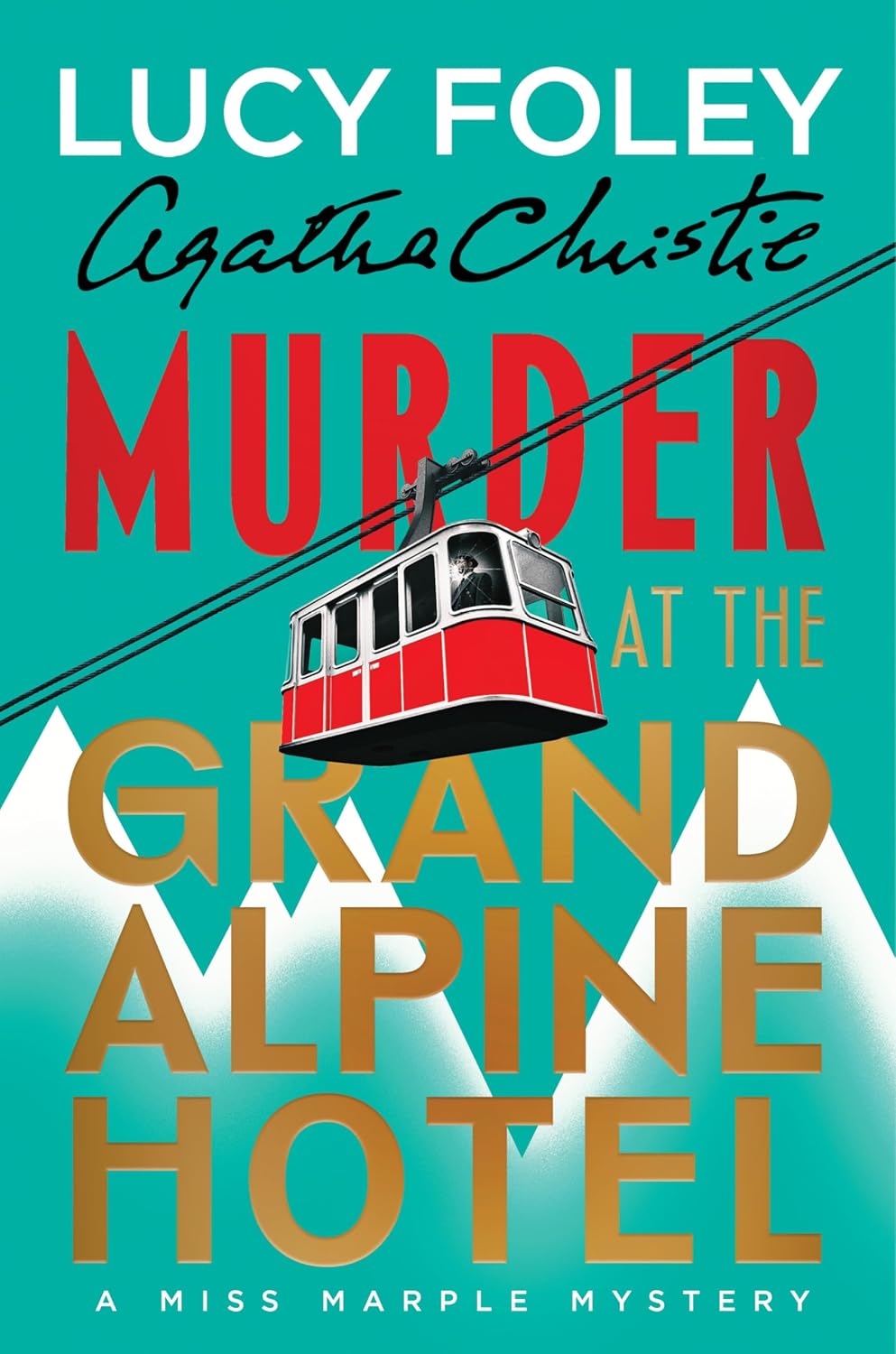
Years after the estates of Tom Clancy, Vince Flynn, and Robert Ludlum chose official successors to carry on publishing books featuring their most beloved characters, the Agatha Christie estate entrusted bestselling author Lucy Foley with a new Miss Marple novel. The result, Murder at the Grand Alpine Hotel, marks the first full-length Miss Marple mystery in half a century. Given Foley’s track record with atmospheric, destination-driven murder mysteries, it comes as little surprise that her first outing with Christie’s legendary detective is a good one. The more interesting question is how much Foley would adapt her own storytelling style to accommodate Miss Marple.
Ironically, Miss Marple is arguably the least interesting character in the book, but more on that later.
Set in 1950, the novel transports readers to a glamorous hotel high in the Swiss Alps, where an exclusive gathering of guests finds itself trapped by a blizzard. Among them are a fading Hollywood actress, an ambitious politician, his society wife, a doctor, and several others carrying secrets and old grievances. When a guest is discovered dead in a mountain gondola, an idyllic winter holiday becomes a murder investigation. Fortunately, Miss Marple is also staying at the hotel, quietly observing the behavior of those around her.
Can detectives ever truly take a vacation? Of course not. As Hercule Poirot knew all too well, when a detective goes on holiday, someone inevitably dies.
The setup is classic Christie: an isolated location, a limited circle of suspects, complicated personal histories, and a killer who may not be finished. It’s also strikingly similar to Foley’s own destination thrillers, which have always owed something to Christie’s approach. The hotel provides a wonderfully contained setting for suspicion to flourish, while the circumstances force guests to remain in close proximity to people they may have good reason to fear. With escape impossible and motives multiplying, Foley has all the ingredients for an entertaining locked-room mystery.
The real departure from what readers might expect is how Foley tells the story. An obvious opportunity would have been to bring Miss Marple firmly into the foreground, allowing readers to spend more time with her observations, reasoning, and personality. Instead, Foley sticks to her familiar ensemble approach, moving among several first-person narrators as their private histories, anxieties, and relationships gradually emerge. This isn’t entirely unlike Christie, who frequently shifted attention among characters and sometimes kept Marple herself in the background. But Foley’s reliance on multiple narrators feels unmistakably like her own work. Readers spend considerable time getting acquainted with the suspects before the suspense fully takes hold.
That approach comes with a tradeoff. The character development is thorough, and Foley carefully establishes the tensions that eventually make the murder so intriguing. But the suspense builds slowly, particularly in the audiobook edition. Despite capable performances from its ensemble of narrators, the delivery is often so gentle and measured that the listening experience occasionally resembles the cozy mystery sleep stories found on Spotify. That’s not necessarily a criticism of the performances themselves. The restrained tone suits the setting and the gradual accumulation of secrets, but it also makes an already leisurely opening feel even more unhurried.
Is it possible that Miss Marple was always relatively boring by Agatha Christie standards? After all, more often than not, Hercule Poirot is the one Christie hero that is adapted for small and big screens.
Either way, Foley gives the reader relatively little opportunity to know her more intimately. Marple observes, listens, and eventually demonstrates the perceptiveness that made her famous, but she’s hardly the spotlight. Christie herself often kept Marple at a distance, but Foley had an opportunity to explore her more deeply than her creator typically did. Instead, she seems more comfortable letting the surrounding cast carry the story. Readers hoping for a distinctly Marple-forward adventure may find themselves disappointed.
Fortunately, the mystery itself rewards patience. Foley knows how to exploit the tensions among people who have carefully constructed public identities while concealing less flattering private histories. As those facades begin to crack, apparently incidental details acquire greater significance, and the confined setting becomes increasingly uncomfortable. The plotting is accomplished, the atmosphere persuasive, and the eventual unraveling gives readers ample reason to reconsider what they’ve been told. Foley’s greatest strength remains her ability to make a gathering of strangers feel like a room full of people with something to hide.
Ultimately, Murder at the Grand Alpine Hotel succeeds more convincingly as a Lucy Foley mystery than as a reinvention of Miss Marple. Those expecting an intimate new portrait of Christie’s beloved detective may wish Foley had taken a bolder approach. But readers drawn to intricate whodunits, suspicious guests, and luxurious destinations with deadly secrets will find plenty to enjoy. Miss Marple may not be the star of every scene, but Foley makes certain she has a mystery worthy of solving.