
The Bottom Line: A darkly comic blast of crime fiction where every old wound has a motive and every revelation feels fresh. Lucy Foley fans will adore Silver or Lead.
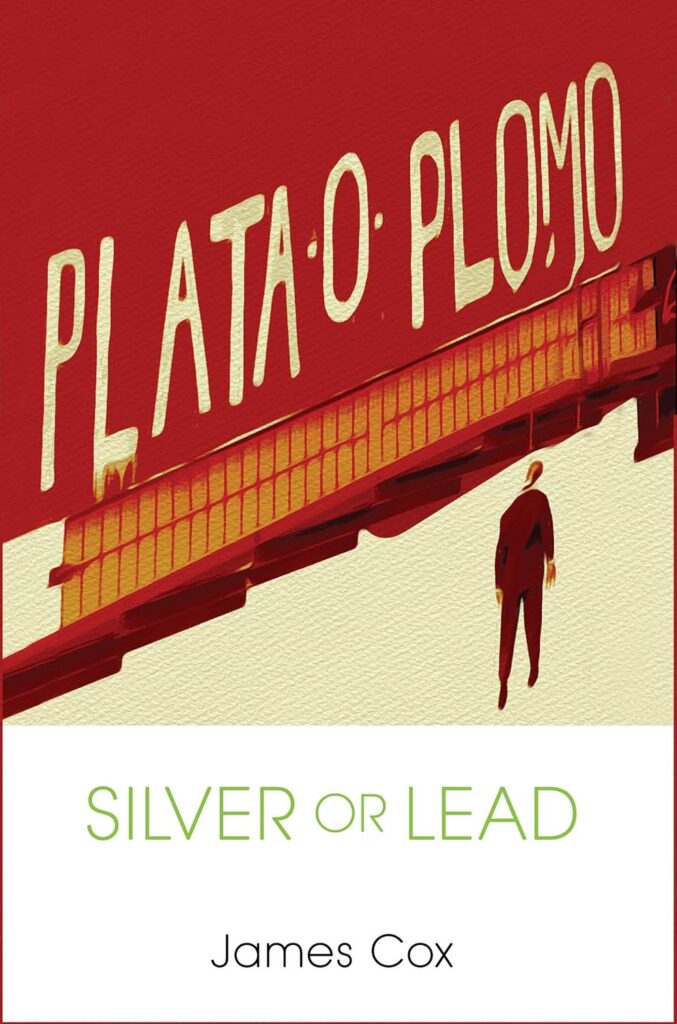
As Silver or Lead opens, struggling actor Ben Rooker is sitting with his best friend, Teddy Dabrowski, at their regular Pasadena bookstore café. As tension builds between Teddy and a woman seated nearby, the café explodes, and James Cox’s novel swerves hard into a wonderfully bizarre crime thriller.
Ben narrates the book in a caustic, self-interrupting first-person voice, one capable of meeting horror with a joke before the shock has even cleared. Author James Cox’s use of the first-person is reminiscent of Lucy Foley’s best work, featuring first-person confessionals that are both hilarious and horrifying, as well as friendships fueled by years of unspoken baggage. The voices Cox gives his characters lend the novel much of its rough energy, which is instantly addictive.
Ben is a widower, a recovering alcoholic and a man used to talking himself through pain, but the bombing turns his sarcasm into a survival mechanism. Among the dead is Rose Vasquez, the estranged wife of a Mexican cartel figure, and her presence at the Bard Café is too pointed to feel accidental. For Teddy, the crime is not simply something that happens near him. It appears to reach back into a past he has tried and failed to bury. Years earlier, in Juarez, he made a cowardly choice that left two young women in the hands of corrupt men. He’s a first-class secret-keeper pulled into the center of a case that seems to know more about him than Ben does. The early suspense comes from that imbalance: Ben is trying to understand the bombing, while also realizing that his closest friend may have been living with a history he never fully confessed.
Cox builds the novel through a shifting chronology, sliding from the bombing and its aftermath into older stories of Juarez, San Marino, hospital corridors, cartel violence and family damage. One of the most effective early structural moves comes when the book returns to the morning of the explosion from Rose Vasquez and Dave Baxter’s point of view. What first looked like a chaotic attack becomes more deliberate and more ominous. Rose is trying to place Teddy, Dave notices a suspicious white van, and the reader begins to see that the café scene Ben survived was part of a much wider design.
In Cox’s hands, nearly all characters defy convention. That’s true even of Detective Sam Jackson, who begins as a hard-edged antagonist and soon receives more weight than the role first suggests. Around Ben and Teddy, Cox builds a world of damaged people, hidden motives and odd alliances. Structurally, Silver or Lead is less a stripped-down investigation than an expansive crime drama with supernatural edges. The book widens from Old Town Pasadena into cartel history, vanished women, buried identities and moral debts that refuse to stay private. Several revelations land by changing the meaning of earlier encounters rather than simply adding new suspects, and the novel gains momentum from repeatedly forcing the reader to reconsider scenes that seemed already understood.
Readers averse to profane humor may find the tone abrasive, but that’s entirely the point. Those who love edgy crime fiction will feel find themselves addicted from the start.