
The Bottom Line: NYPD detectives are the target of a terrifying killer in this taut urban cop thriller. Kim Brady’s refusal to accept the easy answer makes for a thoroughly entertaining police procedural with some satisfying surprises.
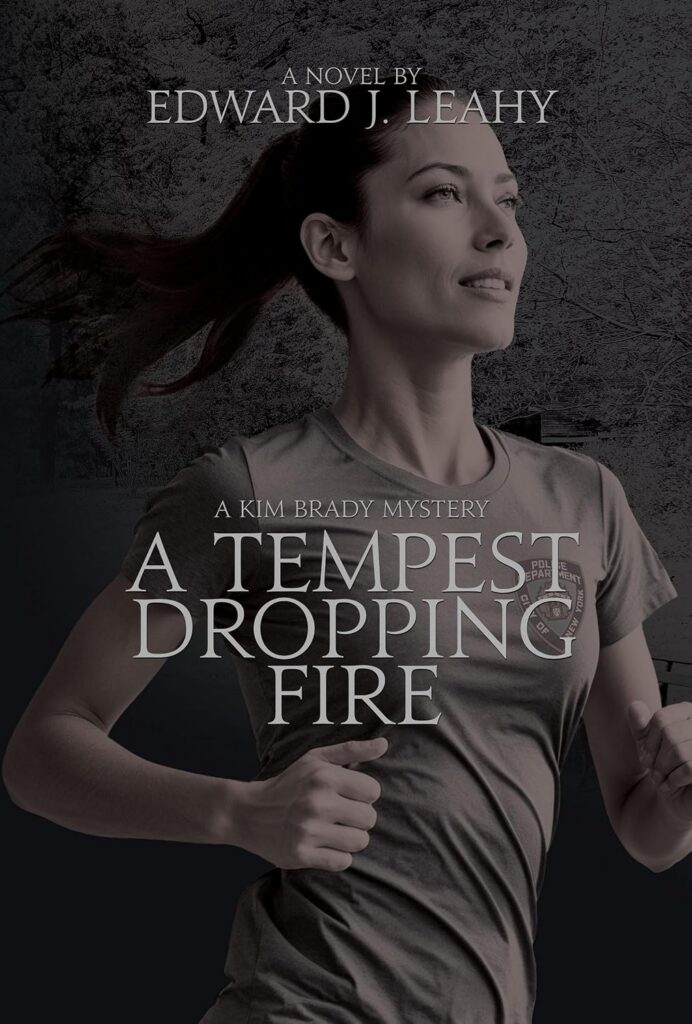
As Edward J. Leahy’s fifth Kim Brady series book opens, the NYPD homicide detective is finishing her first half-marathon in Brooklyn’s Prospect Park. Just as she begins to savor the satisfaction of having beaten her target time, gunshots ring out. Three detectives who had also entered the race are hit, two of them fatally.
The crowded finish area becomes a field of panic, blood, screams and bad information. Kim begins organizing the response herself. The first facts are troubling. Two shooters appear to have fired from opposite sides of the field. A witness can identify where the shots came from, but his credibility is complicated by his wild claim that he is descended from a Knight Templar. The victims’ race sends the media toward a white-nationalist explanation almost immediately, but the fact that the first targets are identifiable NYPD detectives complicates that assumption.
Leahy builds next-level suspense around a familiar danger: after a public tragedy, the first explanation is often the hardest to dislodge. Leahy is also especially good at foregrounding the external pressures police procedurals often leave at the margins. Kim is not simply chasing evidence. She is instead trying to protect the investigation from activists eager for a public cause, journalists eager for a definitive narrative, police officials worried about jurisdiction and reputation, and a mayor whose involvement is both political and personal.
Unlike many police-procedural leads, Kim is portrayed as neither a savant with an uncanny gift for criminal pattern detection nor a rogue misfit defined by a dark personal life. She is compelling because she feels unusually real: capable, practical, observant, and grounded in the habits of the job. Her strength lies less in theatrical brilliance than in restraint, common sense, and the willingness to keep asking what the evidence actually supports. She can be blunt and combative, but Leahy makes her most interesting when she is doing the least flashy thing available, even if that means slowing the case down to ensure she gets it right.
The surrounding cast gives the book much of its charge. Bob Nolan, Kim’s partner, brings warmth, history and vulnerability to a story that could otherwise harden into pure procedure. Cord Washington’s injury makes the investigation personal inside the squad, while Jake, Kim’s husband, anchors the domestic cost of a life spent running toward danger. Mayor Raymond Brandt is a more unsettling presence, while reporter Joanna Dunbar, by contrast, sharpens the media strand without reducing it to caricature.
Structurally, the novel becomes an expansive urban police thriller, featuring a case that widens after the Prospect Park attack. The body count rises as more officers come under attack. Kim’s ability to work across commands becomes as crucial as her instincts at a crime scene. The story steadily opens outward into a larger pattern of violence and consequence, and there are genuine surprises as the investigation begins to test its earliest assumptions.
A Tempest Dropping Fire is a tense, layered mystery for readers who like their thrillers driven not only by who did it, but by what it costs to get the answer right.