
The Bottom Line: Time travel meets archaeological suspense in this captivating tale of greed, conscience and the terrifying cost of second chances.
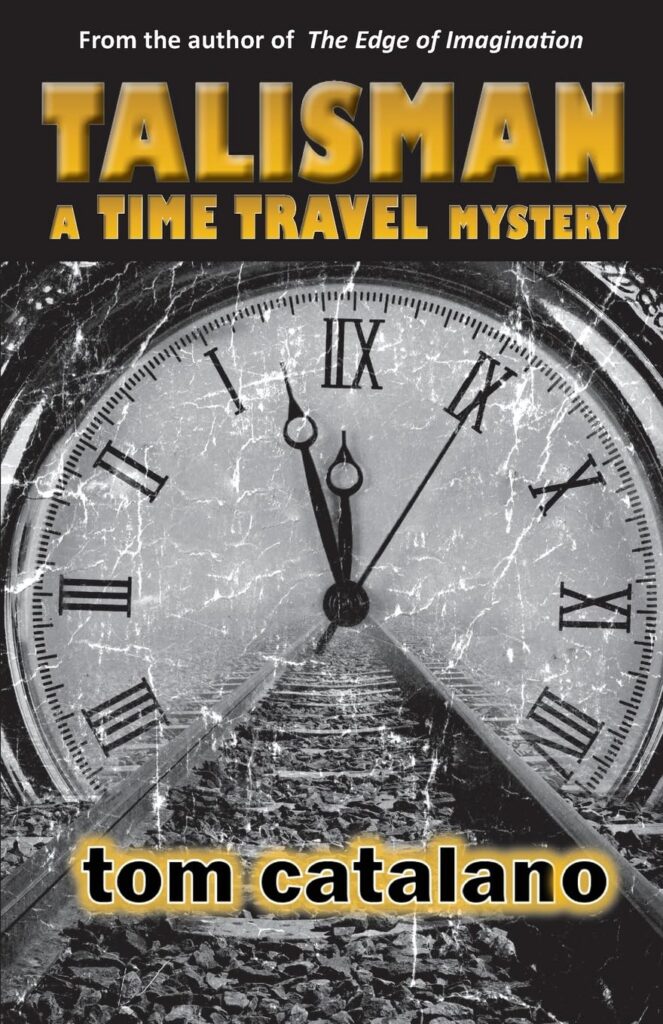
As Talisman opens, American archaeology student John Shaw is digging in the heat of Antigua when his tool sinks into a hidden cavity beneath the sand. Inside is a human skeleton clutching a strange gold device. Supervising professor Henri Rutherford, despite his experience, cannot fit it into any familiar archaeological category: tool, weapon, container, utensil or known artifact. He also notes that its precision seems inconsistent with the skeleton’s apparent age and setting.
The discovery should make the expedition. Instead, Rutherford immediately removes the object from the site, orders John not to tell the other students, and begins treating a scholarly find as private treasure. That act of concealment turns the dig from a professional breakthrough into a moral crisis, and John’s unease soon places him in danger. The talisman eventually proves capable of turning time backward, allowing its holder to relive events while remembering what happened before. Author Tom Catalano makes clear that archaeology is not merely about unearthing the past. It is instead about deciding who has the right to interpret, protect, exploit or preserve it. Rutherford’s secrecy turns scholarship into theft, while John’s discomfort signals the novel’s deeper moral argument that some discoveries are too important, and too dangerous, to belong to one person. Hannah Miller reinforces that ethical counterweight, giving voice to the idea that discovery should serve something larger than ego, ambition or private gain.
Catalano’s style is direct and unpretentious, favoring momentum over ornament. His strongest passages come when suspense and conscience overlap, such as when the talisman is not merely an object of wonder, but a pressure placed on ordinary human weakness. Thematically, he is interested in second chances: whether people deserve them, what they reveal, and what they become when they are unlimited.
The novel is most compelling when it treats time travel as a moral infection rather than a fun superpower. Even a merciful use of the talisman makes the next use easier to justify. The device does not make people better. It reveals them, pressures them, and in some cases diminishes them. The tension comes from watching how easily a power used for good can begin to bend judgment.
Readers looking for a bulletproof talisman origin story may be a bit disappointed, as little is said about why it exists, what it is made of or why it responds to Rutherford and John. However, its mysterious origins also help preserve the talisman’s menace.
Structurally, Catalano moves deftly from discovery to university unease, from an archaeology thriller to a wider time travel suspense novel. Conversations repeat with small changes. Rooms that look safe become traps. The book has shocking reveals and unexpected turns ahead, but the defining source of suspense is rooted in consequence rather than gimmickry. The question is not only what the talisman can do, but what it does to the people who believe they can use it safely.