
The Bottom Line: A riveting, unsentimental crime thriller about the kind of man decent people should avoid, right up until they need him. A masterclass in antihero crime fiction.
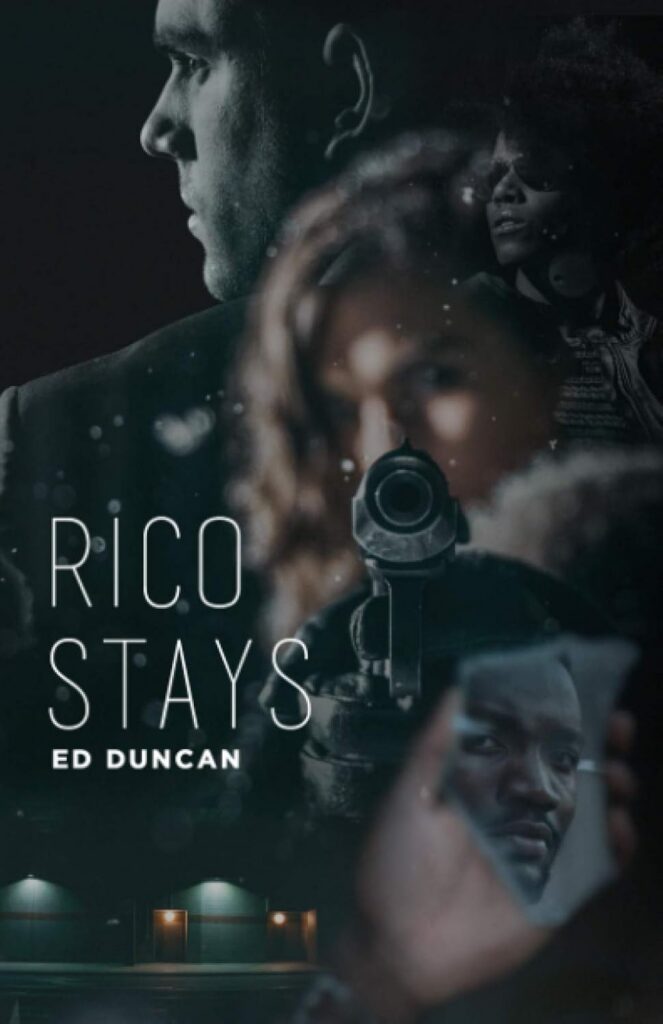
Rico Stays opens with the kind of ordinary Chicago afternoon that is too calm to last. Rico, a seasoned enforcer with a long criminal history, is watching baseball when his girlfriend, Jean, asks him to pick her and an elderly neighbor up from the supermarket. What follows is anything but simple. A boy’s innocent chase after a fly ball ends in a collision with Larry Cosgrove, the hot-headed nephew of a local mob boss. Cosgrove shoves the child to the pavement, bloodies the elderly man who tries to help, and raises his hand against Jean.
Then author Ed Duncan reveals Rico’s stunning tactical prowess. Rico disarms Larry and takes his revolver. Minutes later, three armed men are dead, Larry has vanished and Rico is on the pavement, gravely wounded.
Rico may have survived, but he’s hardly safe. The possible refuge belongs to Paul Elliott, a lawyer whose life Rico has saved more than once. The arrangement is not without friction. Paul’s girlfriend, Evelyn, has not forgotten Rico’s dark history, and she worries that Paul is too willing to be drawn back into Rico’s violent orbit.
The obvious question is whether Rico can survive the retaliation he has triggered. But Duncan also frames the novel around the underlying struggle: can a killer still be owed loyalty by decent people?
Rico is a killer, and Duncan does not pretend otherwise. Yet the supermarket sequence matters because Rico acts when others are weaker, older or exposed. Duncan has created a classic anti-hero drawn without apology or cosmetic softening. He is not a damaged innocent pushed reluctantly into violence, but a man long practiced in it, fluent in its logic and unsentimental about its consequences. Duncan understands that an anti-hero becomes compelling not by being secretly virtuous, but by making readers reckon with the uneasy fact that, in a corrupt and predatory world, the most dangerous man in the room may also be the one with the clearest line.
Around Rico, Duncan assembles a surrounding cast that builds the book’s emotional depth. Jean knows Rico’s brutality and his guarded affection, and she is often the character most willing to ask what his code is worth. Paul brings the story into a different social world: professional, respectable and articulate, but not insulated from fear. Evelyn supplies the necessary resistance to any easy admiration of Rico, while Gus represents an older criminal order trying to manage a crisis caused by younger recklessness. Cleveland gives the book one of its more reflective threads, as grief, prison, old loyalties and the possibility of a different life pull against one another.
Rico Stays will resonate with readers who love mob thrillers, but the book differentiates itself by building the plot around character as much as threat. Its violence is blunt, but its real interest lies in the obligations violence creates: who is protected, who is owed, who walks away, and who cannot.