
The Bottom Line: Love in a post-apocalyptic world rarely feels this exciting or dangerous. Lena Gibson delivers the goods in this dystopian romance.
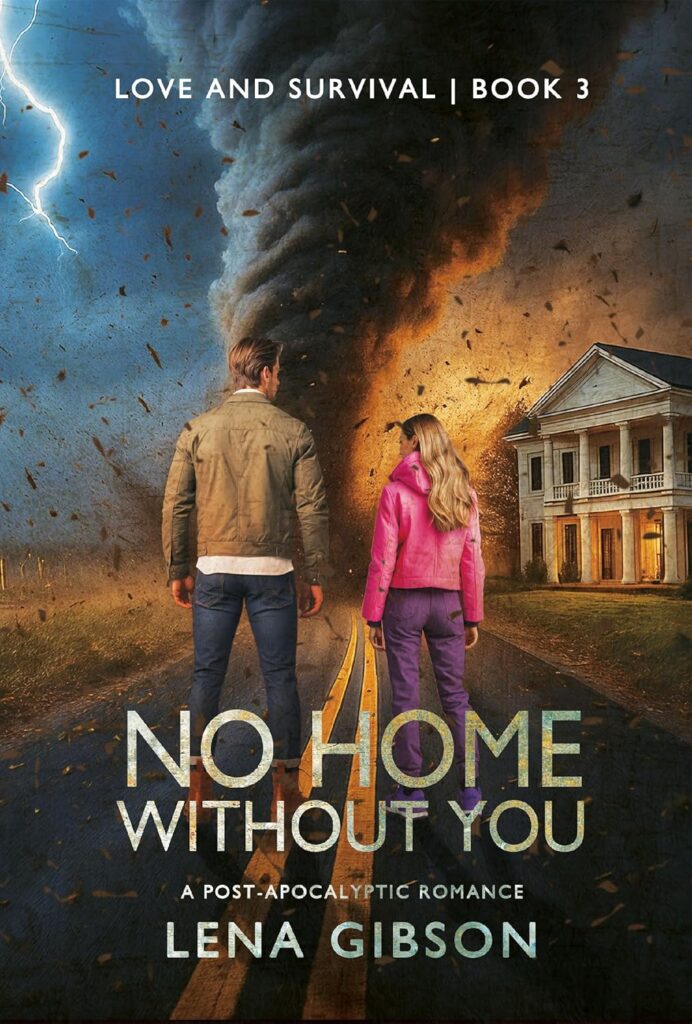
In Lena Gibson’s No Home Without You, Earth has been remade by an asteroid strike, and human survival now depends on security and the difficult question of who gets protected when there are not enough resources to go around. Vita xTerra is a fortified bunker community in South Dakota. Its security has made it a destination for refugees, but it has also hardened some of those already inside.
As the novel opens, xTerra’s leadership has just decreed that no more refugees may enter. The order is tested almost immediately. Thirty-one-year-old Cam Montgomery is on Watch duty when a battered truck arrives out of the morning mist carrying an elderly farmer, his wife, two granddaughters and a load of livestock. They have escaped the Slains, a violent faction expanding across the region, and their need for sanctuary is urgent. One of the granddaughters has been raped, and the family will likely be killed or enslaved if they are turned away.
Complicating matters is the fact that Cam’s mother, the mayor, has posted the rule forbidding refugees in absolute terms. Cam lets them in anyway, and Gibson uses his decision to push the novel quickly from gatehouse crisis into a battle over xTerra’s future. Cam’s choice costs him at home as well as in public. His mother’s authority is challenged, and she answers by disowning the son who refused to enforce her command.
In an earlier timeline in Denver, Lissa leaves the Denver Refugee Center many months after the asteroid strike rather than abandon her cats during a forced evacuation. That early sequence gives the novel much of its texture: overcrowded rooms, predatory neighbors, military orders, scavenged supplies and the hard calculation of what can be carried.
Six years later, in the same post-strike timeline as Cam’s xTerra crisis, Lissa is living alone in an abandoned Nebraska mansion. She has made solitude into a working system. When Cam, injured in an early snowstorm, stumbles into Lissa’s refuge, the novel shifts into a tense survival romance.
Gibson’s world-building is one of the novel’s most obvious strengths. She makes the post-apocalyptic landscape feel tangible by creating it from practical systems rather than vague ruin. Everything and everyone has a purpose. Even Lissa’s cats are more than decorative. They help explain how she has survived, and why she refused to surrender the last attachments that still felt like family.
The result is a believable and broken America where communities are unstable systems desperately trying to balance resources. It’s also apparent how hard times can make well-being relative, such as a telling scene when a character declares that she wants things to return to the “good old days,” and isn’t talking about the pre-asteroid era. Survival requires discipline, but love begins when concern overrides self-protection. The romance remains the emotional center, but the story steadily opens outward into the danger posed by the Slains and the threats of everyday living.