
The Bottom Line: Fully believable from its first shock to its final reckoning, Rosenberg has created the new standard for a modern kidnapping thriller.
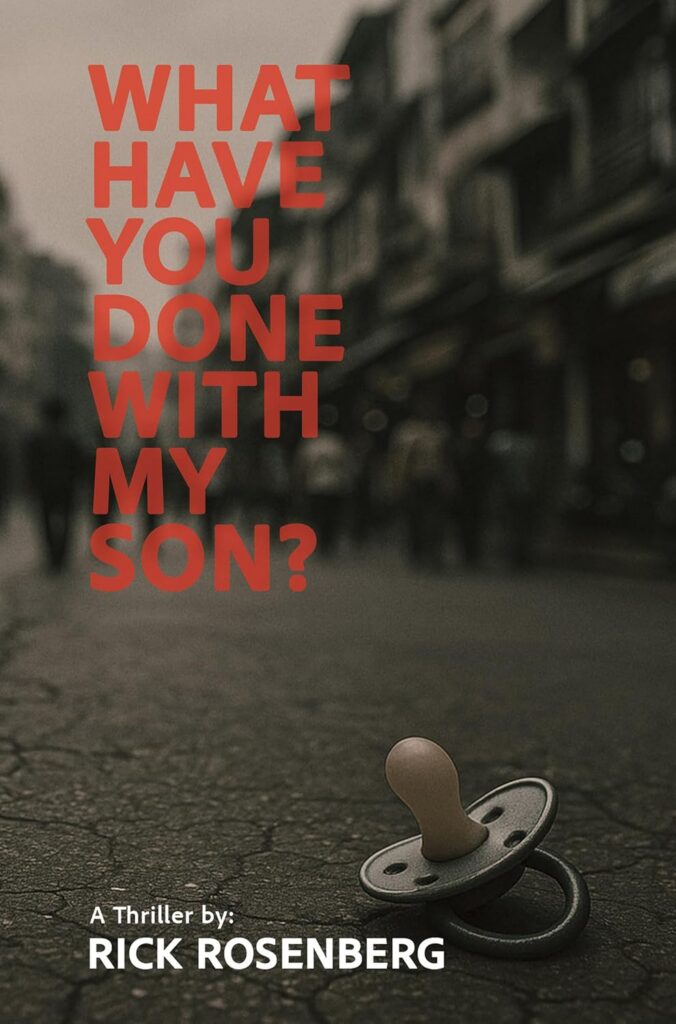
American couple Heather and John Ricci are in Hanoi with the baby they have fought years to bring home. After failed attempts at natural conception, multiple rounds of IVF, a miscarriage, and stalled adoption efforts in China and Nepal, the Chicago couple are finally about to leave Vietnam with Alden James Ricci, their adopted son. Then, at a hotel café, a woman posing as a waitress asks to hold the baby, a teenage boy distracts the couple by reaching for Heather’s wallet, and Alden is suddenly gone.
For Heather, this isn’t just a child abduction. It’s the collapse of the life she has endured years of grief and bureaucracy to reach. Author Rick Rosenberg cuts between the frantic hours after the abduction and the earlier ordeal that brought the Riccis to Vietnam, so that the missing-child plot is rooted in infertility, marital strain, adoption paperwork and the private bargains people make when they are desperate to become parents. The result is a kidnapping thriller in which the emotional stakes are established before the chase truly begins.
Rosenberg is a master at illustrating the practical obstacles of a foreign-city nightmare. Hanoi is not used as a postcard backdrop. It is crowded, loud, humid, confusing, and difficult to read. Every alley, café, hotel room and traffic-clogged street becomes part of the investigation, and every delay feels like another chance for Alden to vanish farther from reach. One of the book’s most pulse-quickening sequences has Heather and John chasing a woman through Hanoi after a clue links her to Alden’s disappearance. The pursuit spills from a restaurant into alleys, streets, traffic and market stalls, turning the city itself into an obstacle course of confusion and threat. The scene works because the Riccis aren’t traditional action heroes. They’re just terrified parents running on adrenaline, and that makes for an actual page-turner.
The surrounding cast gives the novel its wider tension. Hien, the cheerful adoption representative, carries an unease that grows around the orphanage process. Faith at the U.S. embassy adds institutional pressure, while Hue Ho, a former orphanage caretaker, pulls the mystery toward darker possibilities. Most significant is Mitch Alexander, a damaged American Vietnam veteran living in Hanoi, whose history as a combat tracker gives him the skills Heather and John desperately need. Grizzled, compromised and haunted by the war, Mitch brings the book a second vein of suspense.
The book’s movement toward Vietnam’s northern jungle gives the kidnapping plot a harsher survival-thriller edge, full of poisonous snakes, rats, armed men and old wartime shadows. Soon comes the unsettling and shocking suggestion that the mystery of Alden’s disappearance may be bound to a far deeper wrong than Heather and John first understand. The novel’s biggest surprises are best left intact, but Rosenberg is clearly interested in more than whether a child can be found. He is interested instead in what happens when the idea of rescue itself becomes morally unstable.