
The Bottom Line: An emotionally-charged Southern legal thriller where rumor runs wild and truth fights for air.
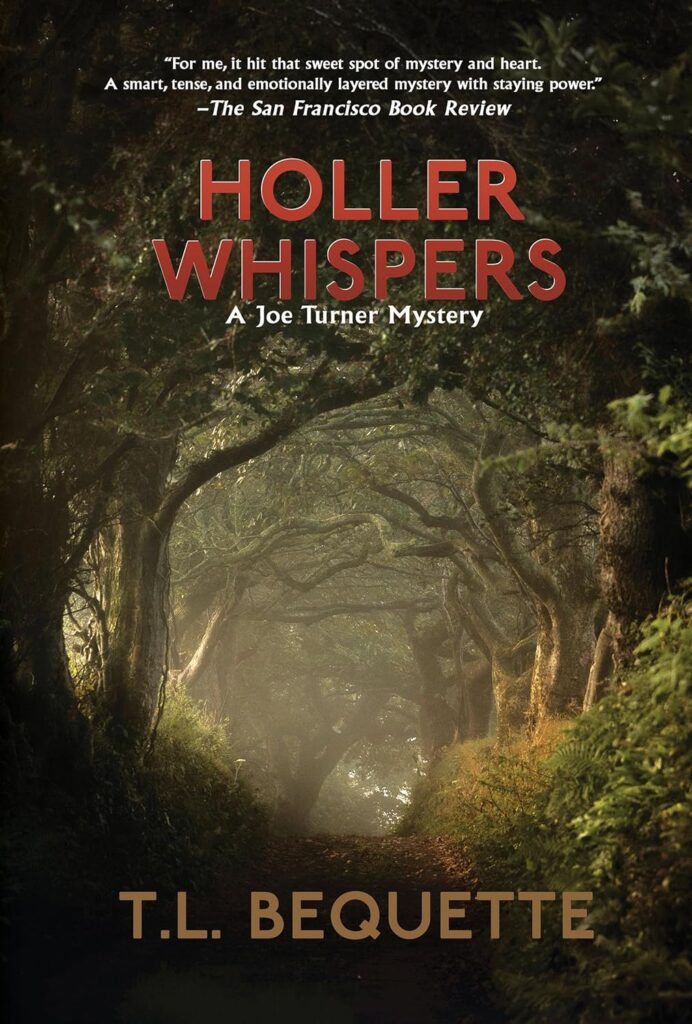
As Holler Whispers opens, Carl Ledbetter, an autistic eighteen-year-old with a formal way of speaking and a mind calmed by Chicago Cubs statistics, is dreading another therapy session. Bright lights hurt, questions about feelings make little sense, and adults keep repeating his name as if that will make the world easier to understand.
The story soon turns to Barton, Georgia, where Carl is charged with murdering Justin Holt, the local high school football hero. Bay Area defense attorney Joe Turner arrives in Barton to take Carl’s case, and what he finds is a case that looks brutally hard to win. It seems that Justin was shot during a football-team sleepover, in a separate bedroom behind his family home. Carl is the only attendee unaccounted for afterward, and a neighbor says he saw him running away. Police found gunshot residue on Carl’s hands, and Carl’s own literal, halting responses to questioning make him sound evasive when he is often simply processing language differently.
Joe doesn’t begin with proof of Carl’s innocence. Instead, he begins with doubt about the certainty of Carl’s guilt. As he gets to know Carl, that doubt becomes more personal and more urgent.
T.L. Bequette shifts among several narrative lanes. Joe Turner’s investigation and courtroom strategy, Carl’s first-person interior chapters, flashbacks surrounding the murder, and tense jury-room deliberations. The structure keeps Joe as the main anchor while showing how the same case is interpreted by the defendant, the town, the witnesses and the people who will decide Carl’s fate. One of the novel’s sharpest early scenes comes when Joe is taken to meet Judge Boniface and realizes, with a jolt, that the man presiding over Carl’s murder trial is the same hostile cyclist he recently cursed out on a running trail. The comic shock quickly gives way to legal menace as the judge presses for a rushed trial, invokes the town’s need for closure, and makes clear that Barton’s grief over its fallen quarterback is already bearing down on the courtroom
The surrounding cast gives the book its social pressure. Joe is sharp, combative, and increasingly protective of Carl, but he is also an outsider trying to read rules no one has written down. Chuck Argenal, his investigator and a former Barton football legend, gives him access to the town’s older loyalties and grudges. Eddy, Joe’s girlfriend, brings quick intelligence and a welcome outsider’s skepticism.
Joe’s fight against hostile local assumptions, damaging forensic evidence, and a courthouse eager for resolution is reminiscent of John Grisham’s Southern legal thrillers, though Holler Whispers distinguishes itself through Carl’s perspective and the jury-room focus. The jury-room sections are especially strong. The jurors do not simply receive evidence. They translate it through impatience, pity, prejudice, private agendas, and their own uncertainty about autism.
This, the third book in Bequette’s Joe Turner mystery series, works cleanly as a standalone and would be an accessible entry point for readers new to the character. T.L. Bequette has a few well-timed surprises up his sleeve, and the ending lands with a genuine shock that reframes much of what came before without feeling unearned.