
The Bottom Line: A twisty, atmospheric murder mystery set against the cinematic beauty of Colorado’s high country. Highly recommended.
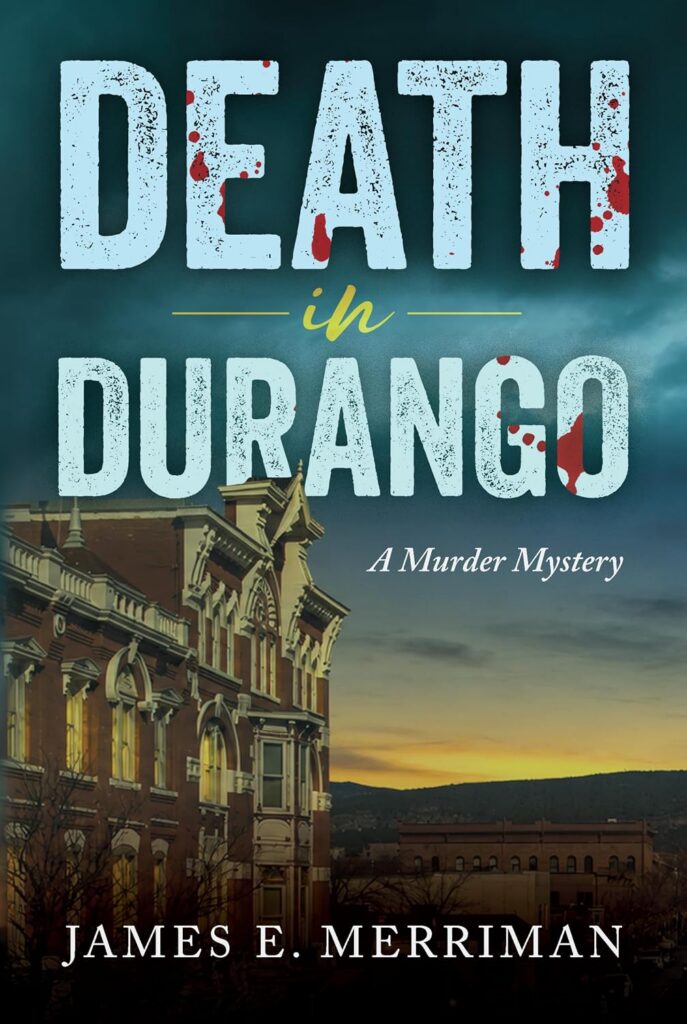
Death in Durango opens on the night of a murder. Seventy-eight-year-old Mike Driscoll has traded New York business life for a working ranch outside Durango, but the move West has hardly made his life simpler. His marriage to the much younger Misty is deteriorating, his daughter Katrina and her wife Shaunna are living on his property, and his booming AI-powered marketing company is negotiating a potentially transformative private-equity deal.
By morning, ranch foreman Chuck McCoy finds Mike facedown outside his tent with blood on the back of his head. Sheriff Buck Showalter soon concludes that Mike has been shot.
Who had access to Mike and reason to want him gone? Mike’s wife Misty, daughter Katrina and Katrina’s wife Shaunna had all been in town together that night, but heavy drinking left Misty and Katrina with important gaps in their recollections of the hours surrounding Mike’s death. Making matters more interesting, Mike’s prenuptial agreement leaves Misty twice as much if he dies as if the couple divorces, and Mike recently visited a feared divorce lawyer.
Lest the book become a family whodunnit, Merriman adds the delicious possibility that Mike was killed by business partner Sal Rossi, who could buy Mike’s shares at a bargain price just as the company’s value may be about to soar.
The consequences of power and greed form a signature theme running throughout Merriman’s body of work. In Red Sun Over Africa, control of a vast diamond resource drives corporate rivalry into deadly territory. In Missing in Tanzania, family land, mineral wealth and financial betrayal turn a missing-person search into something far more dangerous. And in Death in Durango, almost everyone surrounding Mike Driscoll has something to gain or lose from his death. Merriman is a master at hooking readers with financial conflicts before pushing otherwise ordinary decisions toward escalating betrayal, coercion and violence.
Merriman adds depth to the suspect list through a third-person, multiple-POV structure, moving among Showalter, Misty, Rossi and several others. While Showalter is a compelling investigative anchor, Merriman gives readers access to private motives, financial problems, affairs, resentment and dangerous behavior from across the cast. The real attraction is the Driscoll family itself. Wealthy, fractured and suddenly forced to discover what everyone truly wanted from Mike, Merriman has created an engrossing family dynamic where every motive deserves a second look.
The effect is an Agatha Christie-esque investigation in which readers feel like they’re part of the hunt for the killer. Merriman wisely saves one of the book’s most effective turns for the point when a seemingly coherent theory begins to unravel, forcing Showalter to reconsider both motive and capability.