
The Bottom Line: The Caveman Conspiracy delivers everything spy-thriller readers want: covert agendas, divided loyalties, and a hero who knows every mission comes with a lie attached.
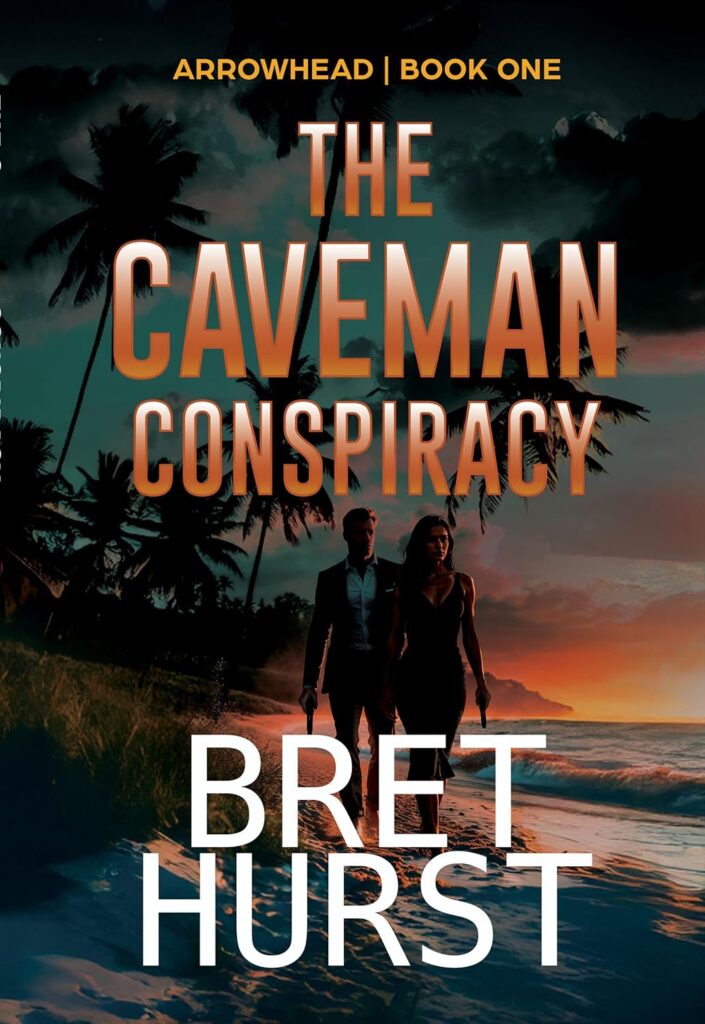
The Caveman Conspiracy opens in western Kansas, where covert operatives lead a home search for documents tied to a failed secret project called Afterimage. From there, author Bret Hurst shifts the action to Miami, where former CIA field operative Eddie Mason’s old boss, Craig Black, turns up with a request to look into wealthy Texas senator Sam Hawthorne. It seems that Hawthorn has had secret meetings with a dangerous underworld figure and is now preparing for a private sailing trip into the Caribbean under circumstances that make even his allies uneasy.
Hawthorne claims to have found a rare plane, but if that’s the case, why is he leaving his security detail behind? Eddie is presented as hired protection and agrees to accompany Hawthorne aboard the Morning Star. Thus begins a two-pronged narrative. While Eddie’s story unfolds on elegant boats and private docks off Miami, Loren Malen—a former CIA operative and the woman Eddie has never fully gotten over— moves through surveillance, tailing, and growing pressure in the Dominican Republic.
Through the course of the book, Hurst gradually reveals more details about Eddie’s backstory with the CIA. Having survived more than his share of dangerous circumstances, we come to see why he’s so wary of everyone he meets, and much of the early tension comes from watching him test every story he is told. Again and again, the novel returns to distrust of institutions, distrust of handlers, distrust even of one’s own memories and motives. Hurst is also interested in the moral cost of covert power. As the conspiracy widens, he keeps circling the idea that intelligence work becomes monstrous when people are treated as tools or expendable assets rather than as human beings with claims on loyalty and protection.
All this brings us to the book title, which refers to the mysterious man Eddie finds living alone in a cave on the island, whom Eddie literally names “Caveman” because the man does not know, or cannot tell him, his real name. But the title also fits the larger conspiracy, because this “Caveman” turns out to be central to the book’s hidden mission, carrying implanted knowledge and becoming the human focus of what first looks like a hunt for documents or data.Throughout, Hurst is especially adept at balancing emotion with intrigue. Loren isn’t just a romantic complication. She’s also the lever Craig uses to pull Eddie back into the game. Their shared history gives the story warmth and unease at the same time, because every professional decision between them is shadowed by unfinished personal business.
Robert Ludlum fans may find the revelations about Afterimage especially intriguing, as well as the book’s emphasis on fieldcraft.