
The Bottom Line: A gritty, compact and emotionally sophisticated crime thriller that should win over plenty of Michael Pronko fans.
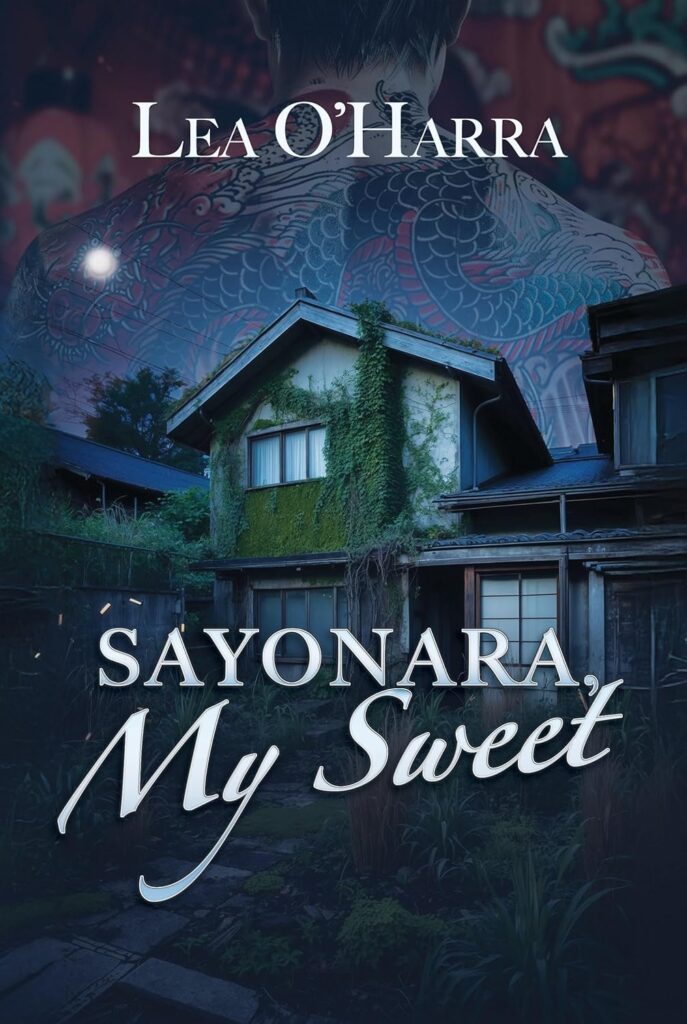
Sayonara, My Sweet opens with a Nippon Daily evening-edition newspaper report announcing the mysterious death of twenty-three-year-old Kaori Hirakata in Murota after she collapses from poisoned chocolates. Set in a quiet town where violent crime is rare, author Lea O’ Harra’s framing is immediately effective.
The initial facts appear to point toward Hiroki Sato, the boyfriend who disappears almost at once, but the novel’s early power lies less in the question of simple guilt than in the unease created by what Kaori had kept hidden from the people around her.
At the center of the first half is Chief Inspector Ito, and he is the book’s greatest asset. He is not a flamboyant detective or a hard-boiled showman. Instead, he is solid, burdened, and deeply alert to the human cost of the crime. Kaori’s death unsettles him partly because she is close in age to his own daughter, and partly because the Hirakata family is already linked in his mind to an older act of violence involving Kaori’s father. That history gives the investigation emotional depth from the start: Ito is not just solving a poisoning, but walking back into an old wound.
While the title is strikingly similar to Jim Thompson’s noir classic After Dark, My Sweet, the book has far more in common with the work of contemporary Michael Pronko, whose Detective Hiroshi series, set entirely in Japan, often delves into the country’s seedy underworld, including yakuza intrigue. Here, O’ Harra threads in the yakuza early and decisively, using Hiroki’s criminal ties and the shadow of organized intimidation to widen the murder beyond private tragedy into something more dangerous and systemic.
What follows is an elegantly layered inquiry. Ito interviews Kaori’s friends and church connections, and the case broadens into a study of class tension, possessive affection, and the danger of moral judgment disguised as concern. Hiroki is treated by several characters as obviously beneath Kaori: he is a factory worker, poorly dressed, from a troubled background, and therefore easy for the town to cast as the sort of young man who must be guilty of something. That dynamic gives the novel a sharp social edge. The early chapters repeatedly suggest that what people think they know about decency, status, and suitability may be precisely what blinds them.
While Ito anchors the opening movement, the story later widens to include Koji Yanagihara, the journalist circling the case, and, in the later timeline, Aki Hirakata and Rhoda Ellison, whose connection to the family house allows the past to feel physically present. That structure gives the book breadth without sacrificing tension. Murota itself emerges as more than a backdrop: a town of routine, gossip, piety, and buried fear. Further, every lead also exposes tensions around class, reputation, religion, and fear, so the crime never feels isolated from the community that produced it. By the time the book moves into its later timeline, it has already established a compelling emotional mystery alongside the criminal one: not only who harmed Kaori, but how an entire family and community learned to live around the damage.