
The Bottom Line: A must-read conspiracy thriller built on one jaw-dropping idea: the Confederacy’s heirs are waging a new battle for America.
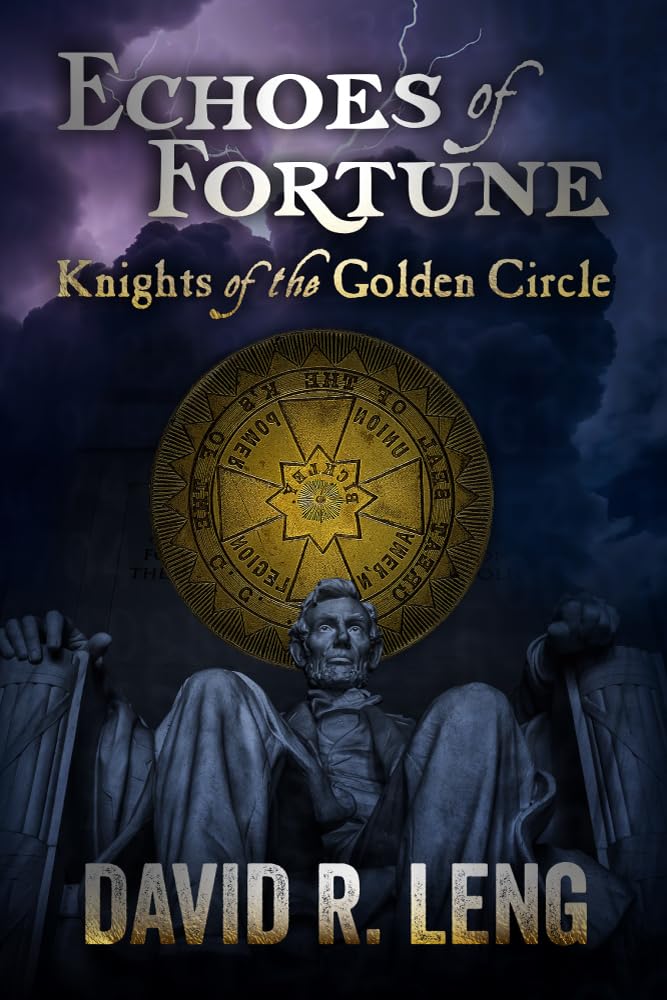
The third book in David R. Leng’s Echoes of Fortune series is a fast-moving thriller about a perpetual war that has survived by learning not to look like one. The story begins in 1864, during the final winter of the American Civil War. The beating heart of this page-turner is the Knights of the Golden Circle, a clandestine pro-Confederate organisation that sought to build a slave empire stretching from the American South through Mexico and the Caribbean.
In the book’s opening scene, a mysterious visitor urges Confederate President Jefferson Davis to accept that the war is lost. Davis is asked to preserve the treasury reserves he has held back and entrust them to men willing to work beyond their own lifetimes. The recovery instructions are later divided so that no one person possesses the complete secret.
More than 150 years later, historian and former Navy SEAL Jack Sullivan is asked to decode a family document linked to caches of Confederate coins in the Ouachita Mountains. For Jack, this is territory that is both familiar and all-consuming. In The Search for Braddock’s Lost Gold, Jack’s obsession with buried treasure damages his relationship with Emma, the love of his life. Leng’s Shadows Over Cozumel reunited Jack and Emma around the mystery of a Confederate shipwreck, which puts them both in danger.
In Knights of the Golden Circle, what starts as a Confederate cipher and treasure search becomes a conspiracy involving cyberwarfare, a stolen experimental vessel, an attack on the United States Capitol, market manipulation and the Knights’ global Council of Thirteen. One of Leng’s most compelling sources of suspense is Jack’s realization that some clues have been planted by people who already understand how his mind works.
As Jack, Emma and series regular Steve Johnson dig deeper, they begin to uncover a vast conspiracy. The Knights of the Golden Circle did not simply disappear after the Civil War. Instead, they abandoned open rebellion and spent generations infiltrating the institutions that shape public life. In a fascinating twist, the organization no longer seeks a literal restoration of the Confederacy. Instead, it seeks control over political outcomes, financial systems, communications and military power.
Leng moves between the Confederacy’s final months and the modern investigation, allowing each timeline to reveal secrets and betrayals that reshape the other. On a style level, Leng’s prose has always had a screenplay-like economy. His style is strongly visual, clear in its physical staging and quick to move from atmosphere into dialogue and action. Here, the story moves from candlelit rooms in collapsing Richmond to frozen Washington streets, mountain cabins, military command centres and hostile waters.
As the story progresses, Leng’s historical and modern threads tighten around each other with increasing force. Jefferson Davis limits knowledge of the secret, while intelligence officer Ezra Harrington divides the recovery instructions so that no single person possesses the complete code. The underestimated servant Ellen moves through the Confederate Executive Mansion almost unnoticed, giving the historical plot a counterweight to the powerful men who assume that authority and intelligence belong exclusively to them. These chapters do more than explain the cipher. They show the original betrayals and moral compromises that the modern characters are still trying to untangle.
When we reviewed Leng’s first book, we recommended it for fans of Steve Berry and James Rollins. At this stage, we need to add Dan Brown fans to the mix. As Jack continues to evolve, his accumulated expertise makes him increasingly like Brown’s memorable academic investigator Robert Langdon, minus the long, insufferable monologues.
Move Knights of the Golden Circle to the top of your reading queue.