
The Bottom Line: With wolves across the river and murder in the high meadow, Avalon Moon knows exactly how to raise the hair on your neck. Move it to the top of your book queue.
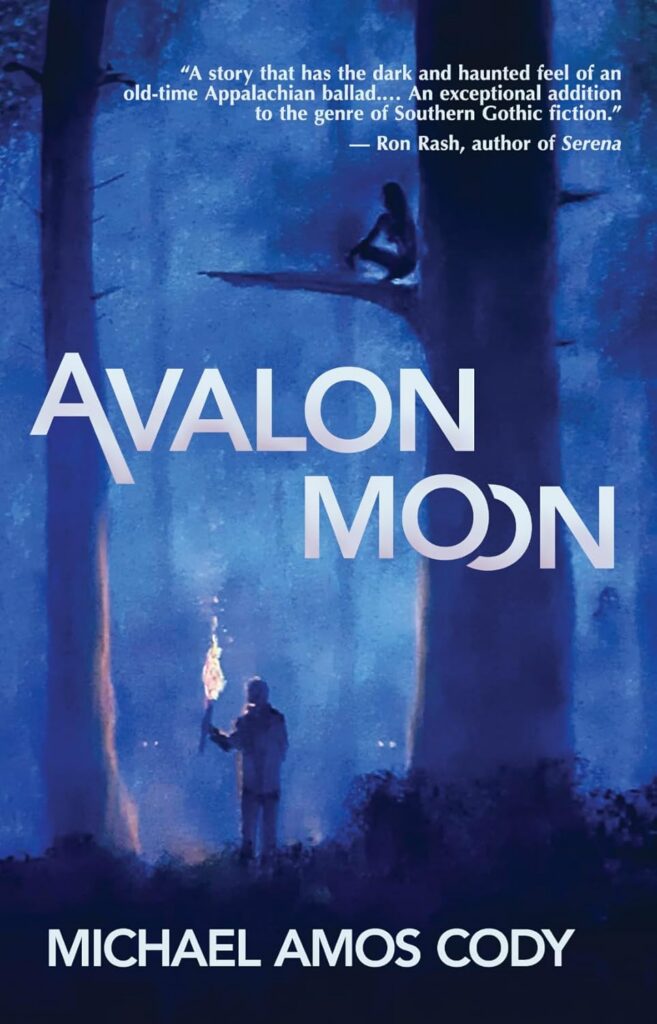
Gabriel Tanner, editor of a weekly newspaper in the North Carolina mountain town of Runion, expects little excitement from an early March county meeting. Instead, local Spellman Anderson IV explains his controversial plan to establish a wolf sanctuary on Christabel Island, setting off fears of escaped animals, nighttime howling and threats to stock and children.
Meanwhile, a man goes missing and is later found dead in a highland meadow beside an unidentified woman. Soon, another man and woman disappear, and a female deputy is murdered. As the case widens, Gabriel is drawn beyond the normal boundaries of his profession, while Plumer Reeves, a reclusive man known for helping find the missing, begins looking into the death at the request of the dead man’s niece, Livvy Goforth.
Author Michael Amos Cody gives the book a Gothic charge in chapters told from the point of view of Spellman IV’s daughter, Ariel. She discovers a hidden manuscript suggesting that the island may already have a darker history of beastly terror. Cody handles this material with considerable restraint. He does not completely embrace the allure of werewolf fiction, but neither does he confine the book to procedural logic alone. The result is a mystery novel suffused with dark atmosphere and Appalachian memory, one in which profession, landscape and myth continually shape the reader’s understanding of what kind of danger is actually at hand.
Cody is patient without becoming inert, literary without losing narrative grip. Avalon Moon begins in local controversy and expands into something darker, stranger, and more resonant than a standard murder investigation. By grounding suspense in profession, community, and place, then allowing folklore and history to deepen rather than overwhelm the central mystery, Cody has written a thriller of unusual richness. Gabriel is an effective amateur sleuth because Cody understands how a profession can shape narrative form. Gabriel is not a police investigator, and the novel benefits from that. As an editor, he works by attention, synthesis, and context. He notices the pressure points in a room, the drift of local opinion, the way apparently minor details begin to speak to one another over time. Cody uses journalism here much as another novelist might use police procedure or legal process — as a disciplined way of seeing. Meanwhile, eccentric tracker Plumer Reeves provides the complementary energy the novel needs. Where Gabriel is socially embedded, Plumer is solitary, haunted, and harder to place.
Avalon Moon works first and foremost as a murder mystery. The deaths are unsettling, the threat feels real, and the investigation keeps widening in satisfying ways. But Cody also adds a Gothic atmosphere and a memorable mountain setting that make the book feel far more distinctive than your average thriller.